Newcastle Disease Virus current situation in Nigeria

In the poultry world, a hatchery is not merely a building that houses machines; it is an ultra‑precise “bioreactor.”
It is the zero‑error station where genes and genetic blueprints transform from a silent egg into a vibrant chick full of life.
It is the central link connecting pedigree and grandparent investments to meat productivity, and the revealing mirror that exposes any shortcomings in farm management.
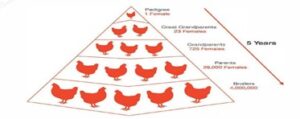
The journey from the top: The breeding pyramid and the hatchery as the gatekeeper:
The story begins with Pedigree and Grandparent stock—birds in which millions of dollars are invested to obtain the best feed conversion and immunity.
They are followed by Parent flocks that produce hatching eggs.
The hatchery as a success factor: Here, the hatchery acts as a “filter,” testing the efficiency of breeder nutrition, accuracy of fertilization processes, and hygiene of rearing.
If the hatchery fails to extract this genetic potential, the profitability of the entire chain collapses, rendering all previous efforts futile.
Hatching technology: The struggle between digital intelligence and thermal exchange:
Machines have evolved to resemble intensive care units, and the technology follows two main schools:
Multi‑stage system:
Eggs of different embryonic ages are placed in the same machine. The system relies on the idea that older embryos produce excess heat, which is used to warm newly set eggs that require heat.
Disadvantage: Disinfection is very difficult because the machine is never empty, and humidity control must remain “average” to suit all ages.
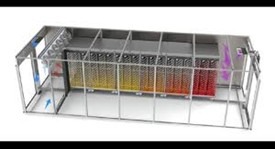
Single‑stage system — “The precision revolution”:
All eggs enter and exit at the same time. A precise embryonic curve is applied: early days require higher temperature and restricted ventilation to concentrate CO₂ and stimulate vascular development,
while the final days require increased cooling and ventilation to remove excess heat.
Advantage: Provides the highest level of biosecurity (All‑in, All‑out) and produces highly uniform chicks.

Inside the hatchery: Stages of producing the superior chick:
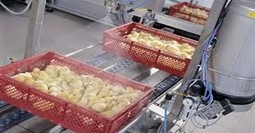
Receiving and grading: Eggs are examined and cracked or dirty eggs are discarded because one contaminated egg can spoil an entire machine.
Setting: Eggs remain for 18 days and are turned automatically every hour at a 45° angle to prevent embryo adhesion.
Transfer: On day 18, eggs move to hatching baskets, and candling is used to remove infertile eggs.
Hatching: During the final three days, humidity increases to soften the shell as the chick breaks out.
Engineering immunity: The hatchery as a preventive hospital:
The hatchery is where the chick’s immune shield is formed before reaching the farm.
Chicks hatch with immature immunity, and the early hours are critical for building defense lines.
Importance of early vaccination:
Rapid protection against epidemic diseases (such as Marek’s and Newcastle).
Uniform vaccine delivery to all birds.
Early stimulation of lymphoid tissues for lifelong efficiency.
Modern vaccination methods:
In‑ovo vaccination: Administered on day 18 or 19 directly into the amniotic fluid or embryo, providing immunity before hatch.

Conclusion: Economic return — Why the hatchery is the gold mine:
The hatchery is the profit‑maximization center in poultry companies.
A 1% increase in hatchability means millions in additional revenue.
High‑quality chicks ensure excellent feed conversion ratio (FCR).
Summary: The hatchery is the golden scale translating breeder quality into broiler success.
Investment in hatchery technology and vaccination is not a luxury but the only guarantee of profitability in a numbers‑driven industry.
Eng: Mohamed Samir
Hatcheries consultant
General Manager of Hatcheries sector Olam Agri