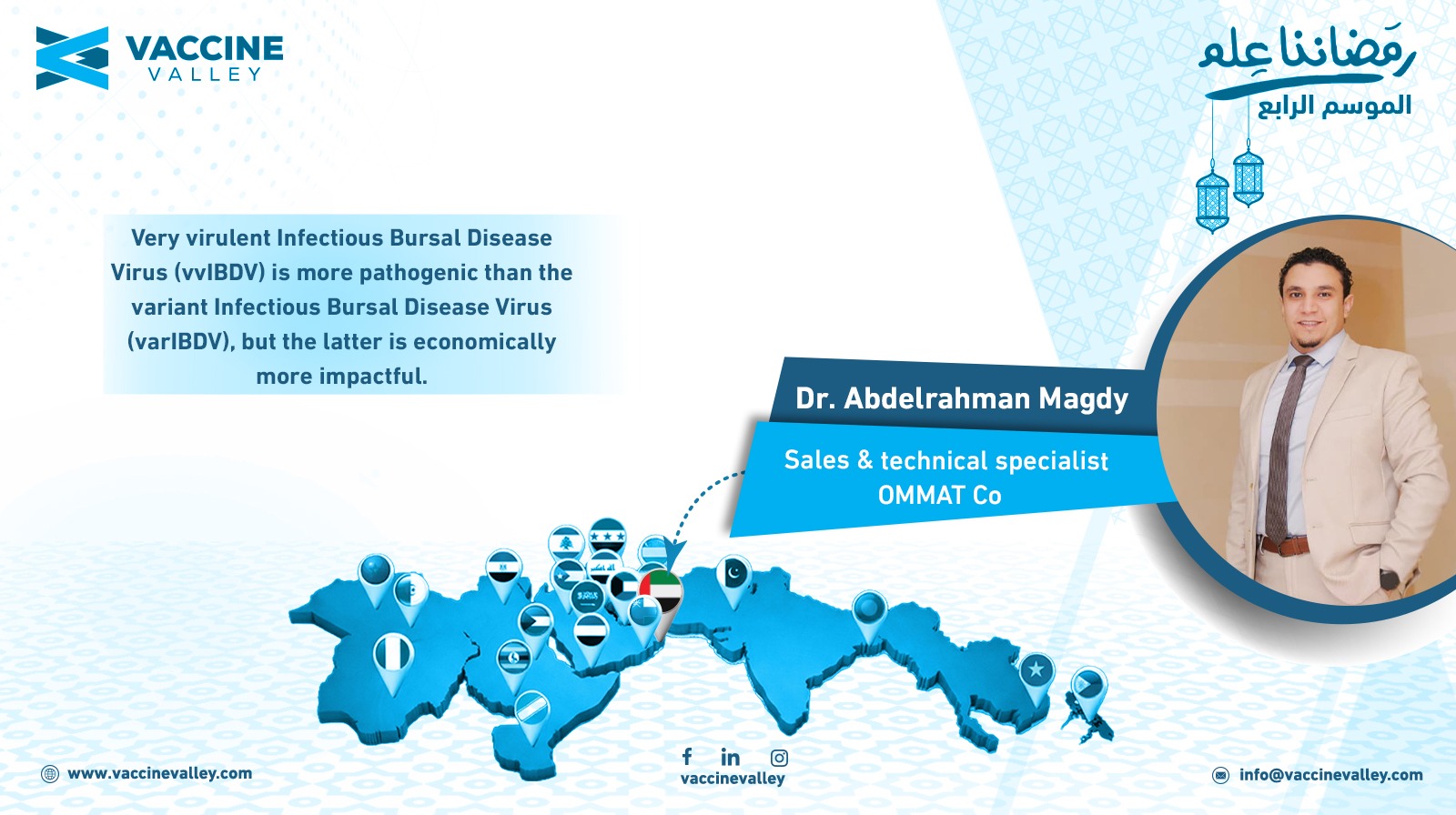
The very virulent Infectious Bursal Disease Virus (vvIBDV) is more pathogenic than the variant virus (varIBDV), yet the latter is considered more economically dangerous. Do you agree or disagree with this statement?

The very virulent Infectious Bursal Disease Virus (vvIBDV) is more pathogenic than the variant virus (varIBDV), yet the latter is considered more economically dangerous. Do you agree or disagree with this statement?

Why does vvIBDV infection cause hemorrhages and mortality?

  • High Cytolytic Capacity: vvIBDV strains are characterized by a high ability to induce cytolysis, leading to widespread lymphoid necrosis and vascular injury.
  • Cytokine Storm: vvIBDV triggers an intense inflammatory response and a “cytokine storm” (such as TNF-α, IL-1β, IL-6), which contributes to vascular damage and coagulation disorders.
  • Thrombocytopenia: Hemorrhages occur secondary to a decrease in platelet count (thrombocytopenia) and coagulopathy.
  • Fatal Outcome: This vascular damage leads to hemorrhaging and clotting disorders, ultimately resulting in death.

Why does varIBDV infection NOT cause hemorrhages or mortality?

  • Mild Inflammation: Variant IBDV (varIBDV) induces a milder immune response with limited inflammation.
  • Targeted Replication: It replicates primarily in bursal lymphocytes but does not significantly damage or infect the blood vessels.
  • Hemostatic Stability: Platelet counts and clotting times typically remain within normal ranges.
  • Result: Consequently, no hemorrhages or mortality occur.

If so, why is the breakthrough level of the variant strain (varIBDV) higher than that of the very virulent strain (vvIBDV)?

  • The Primary Reason: Immune Evasion.
  • VP2 Mutations: Mutations in the VP2 protein mean that antibodies generated from vaccines cannot neutralize the virus.
  • Vaccine Failure: Infection occurs despite having high levels of maternal or vaccine-induced antibodies.
  • Pathogenicity vs. Breakthrough: Breakthrough capability does not equal pathogenicity. Variant strains may be less virulent (no mortality) but are more capable of escaping immunity.
  • Outcome: No mortality, but severe immunosuppression and poor response to subsequent vaccinations due to the virus’s ability to evade the immune system.

Article Reference :

Tags :
Share This :

Request an Appointment