The Impact of Mycoplasma in Laying Hens Focusing on Egg Quality, Immunity, and its Role in Predisposing for Viral Infections

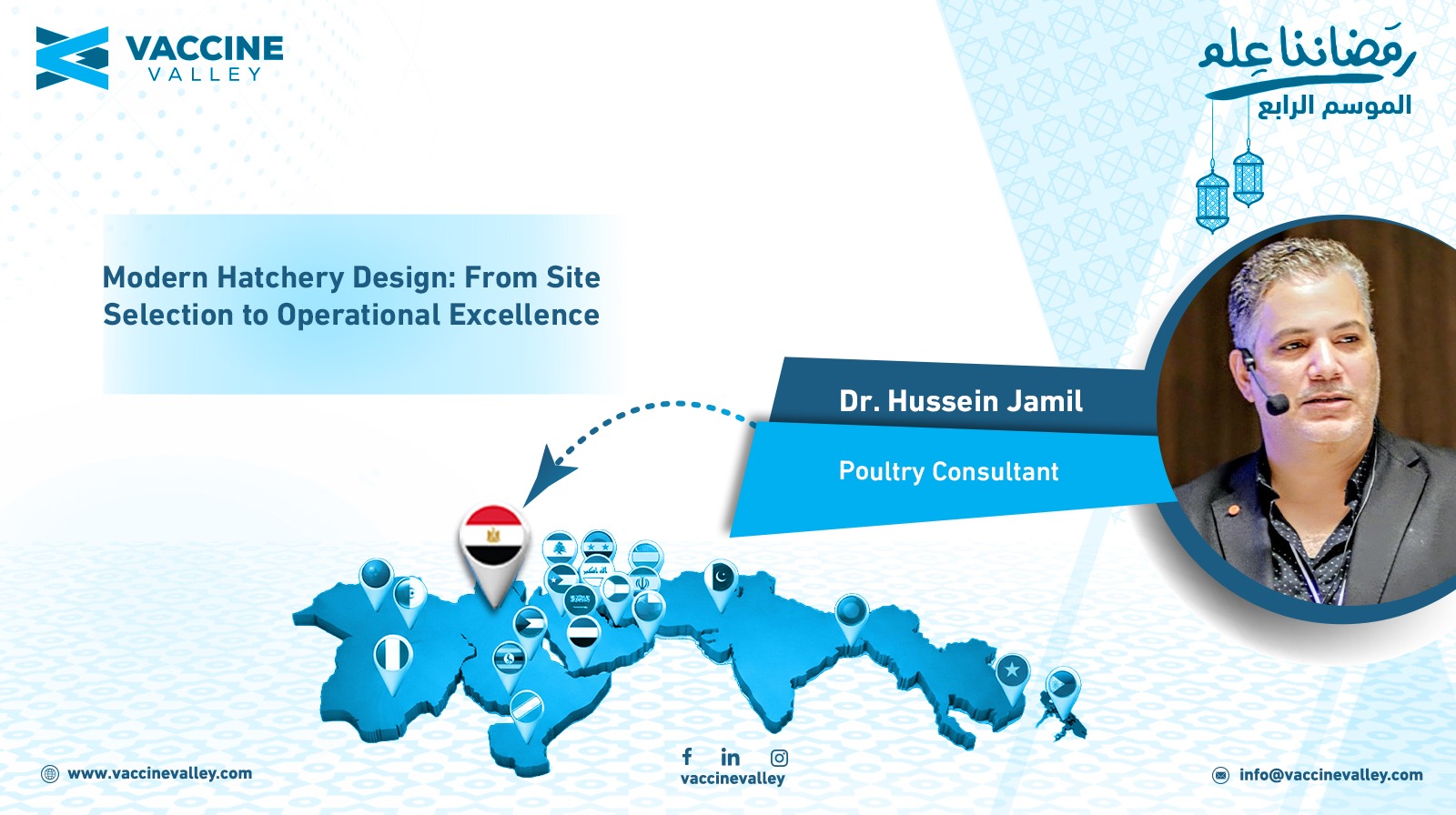
With the significant development in the poultry industry, a hatchery is no longer just a building containing machines. It has become an integrated system that relies on engineering, management, biosecurity, and data analysis to achieve the highest hatchability rates and chick quality. It is not easy to find hatchery managers who have had the opportunity to participate in establishing and building more than one hatchery throughout their professional careers.
Key fundamental aspects that must be considered when establishing or upgrading any hatchery:
First: Hatchery Site Selection
Site selection is the cornerstone of project success and must consider:
– Safe distances according to biosecurity requirements
– Proximity to breeder farms or the target market
– Availability of stable energy sources and clean water
– Easy access to roads and services
– Study of soil characteristics and climate
Second: Determining Capacity and Type of Operation
The following must be defined:
– Hatchery production capacity
– Operating system (Multi-Stage or Single-Stage)
– Future expansion plans
– Energy and operating costs
Third: Selection of Machines and Equipment
The type of machines directly affects:
– Hatchability rate
– Energy consumption
– Chick quality
– Maintenance costs
Attention should also be given to auxiliary equipment such as:
– Washing and disinfection systems
– Ventilation systems
– Egg and chick transport systems
Fourth: Hatchery Building Design
A good design ensures:
– Separation of clean and contaminated areas
– Smooth flow of eggs and chicks
– Reduction of cross-contamination
– Ease of operation and maintenance
Fifth: Ventilation and Environmental Control
Among the most important factors for hatching success:
– Temperature
– Humidity
– Air velocity
– Oxygen concentration related to altitude above sea level
Sixth: Egg and Chick Transportation
Attention should be given to:
– Properly equipped vehicles
– Control of temperature and humidity during transport
– Minimizing transport time
Seventh: Workforce
The best machines will not succeed without a trained team.
Investment is required in:
– Staff training
– Standardizing operating procedures
– Performance monitoring using data
Finally: A Clear Business Plan
Any successful hatchery project requires:
– An operational plan
– A maintenance plan
– An expansion plan
– Clear performance indicators
Success in hatching is not a coincidence; it is the result of scientific planning and professional execution.
Designing a modern hatchery is an integrated engineering and managerial project aimed at:
– Highest hatchability rate
– Best chick quality
– Lowest production cost
– Highest level of biosecurity
Every step that is properly planned from the beginning saves years of problems later.