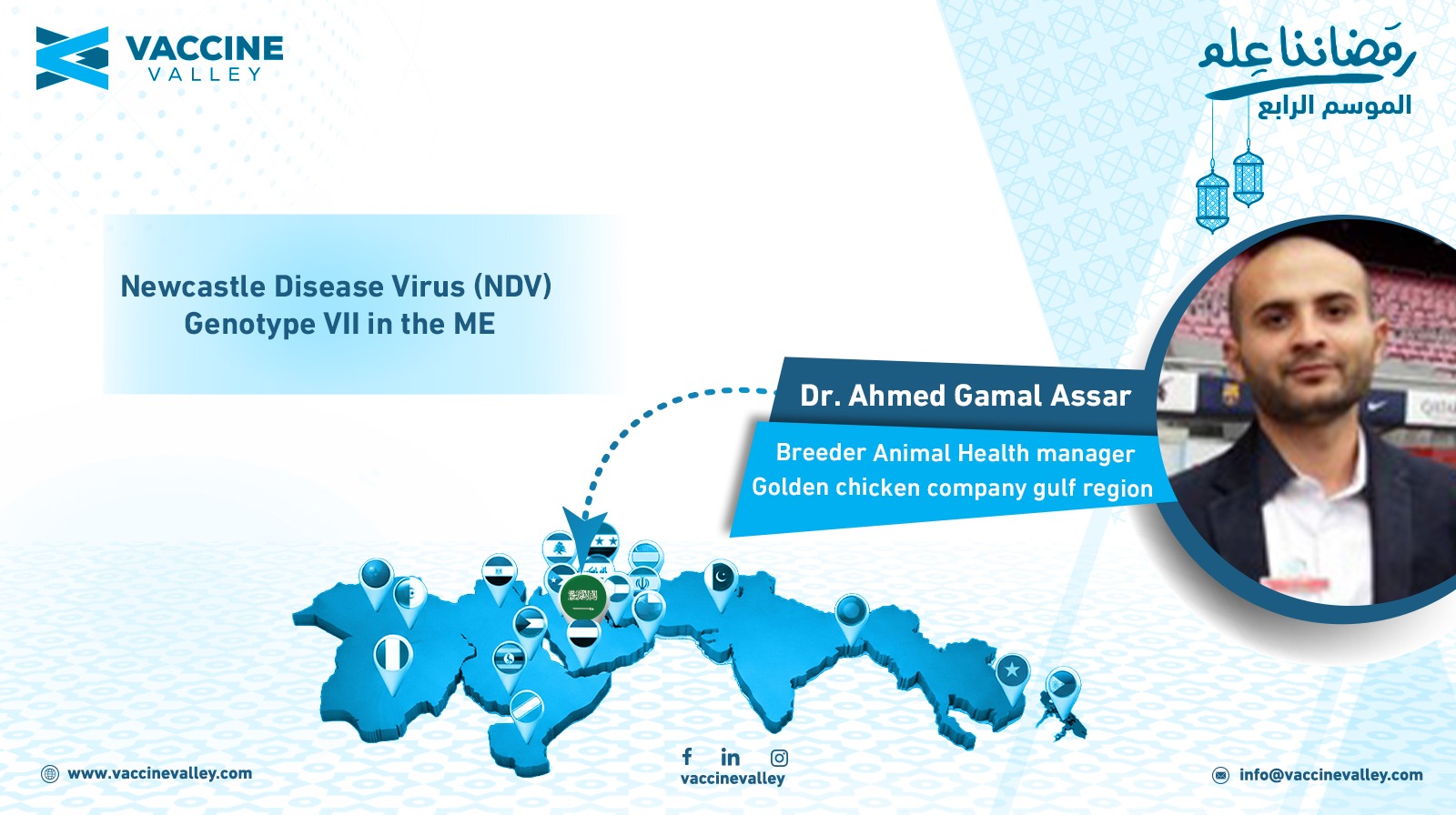
Background and Global Context of Genotype VII
- NDV Genotype VII is recognized as one of the most virulent and economically damaging NDV genotypes circulating globally. It has been linked to multiple epizootics with severe mortality and egg production drops. Several sources highlight that Genotype VII is predominant in the Middle East,
- Genotype VII is documented as predominant in the Middle East region, with repeated outbreaks reported in various countries.
- This genotype is associated with high virulence and severe losses in poultry, including both broilers and breeders.
- Regional scientific reviews confirm persistent circulation of Genotype VII and reported outbreaks across the Middle East.
Evidence of Genotype VII Circulation in the Gulf Region (2021)
- regional dominance of Genotype VII and its continued circulation during and beyond 2021 are well‑documented.
- Regional Evidence Supporting Genotype VII Activity in Gulf 2021
- Genotype VII continues to cause outbreaks throughout the Middle East and North Africa (MENA), including the Gulf belt. The Poultry Site report confirms high incidence of genotype VII in the Middle East region.
- Ongoing NDV challenges, necessity of genotype‑specific vaccines, and presence of co‑circulating virulent genotypes within the region.
- Given the above, and the pattern of regional epidemiology, Genotype VII presence in Gulf breeder farms in 2021 is consistent with regional surveillance patterns and aligns with field reports of unexplained mortality and egg production losses in commercial breeder flocks.
Mortality
Genotype VII NDV is associated with:
- Extremely high morbidity (up to 100%) and high mortality depending on immune status.
- Rapid flock spread, with birds infected within 2–6 days after exposure.
- Breeder operations in several Gulf enterprises reported:
- Sudden mortality spikes in PS flocks
- Acute respiratory and neurological signs
- Increased culling and depletion of peak‑phase breeders
Egg Production Losses
NDV outbreaks—even in vaccinated flocks—are known to cause:
- Sharp drops in egg production (even in well‑vaccinated breeders).
- Poor egg quality (thin-shelled, misshapen)
- Reduced hatchability and increased embryonic mortality
These patterns match field observations from breeder farms in the Gulf during 2021, where genotype VII challenge led to prolonged production drops despite standard vaccination protocols.
Vaccination Program Performance and Limitations
Live Vaccines (Genotype II / Lasota Based)
Most Gulf programs rely on Lasota‑based (genotype II) live vaccines.
- Studies confirm that genotype II live vaccines stimulate mucosal immunity but are not genotype‑matched to VII.
- Research shows genotype II live vaccines can induce immune responses, but the genetic divergence may reduce protection against genotype VII field strains.
Field implication:
- Birds may survive but continue to shed virus, contributing to persistent flock‑level infection pressure.
- Altered Calcium-Porphyrin synergy, White shell eggs recorded more 10 days post challenge, often related to beginning of recovery stage after sharp drop and stabilization stages.
Vector Vaccines (Recombinant / Chimeric)
Recombinant vaccines incorporating genotype VII antigens (F or HN proteins) into a Lasota backbone have been investigated.
- Chimeric vaccines express genotype VII antigens but are still based on Lasota genotype II, raising questions about full homologous protection.
- Field implication:
Improved immunity vs. classical Lasota, but not fully protective under heavy challenge.
Killed (Inactivated) Vaccines Containing Genotype VII
Many Gulf farms have adopted killed vaccines formulated with genotype VII antigens.
Scientific findings confirm:
- Use of killed genotype VII vaccines improves antibody levels and reduces clinical severity, especially when used with live genotype II priming.
- Despite this, complete protection is not always achieved, particularly in high‑challenge conditions.
Field implication:
Mortality can be controlled, but egg production drops, viral shedding, and secondary infections may persist.
Why Complete Protection Was Not Achieved
Antigenic Mismatch
- Even though killed genotype VII vaccines are closer to field strains, sub‑genotype variation (VII.1.1, VII.2, etc.) may cause partial mismatch.
- Recent molecular surveillance (2025-2026) in regions like the Middle East, North Africa, and Southeast Asia has identified specific mutations in the Genotype VII sub-lineages.
- To manufacture an antigenically matched killed vaccine, reverse genetics is used to flip these virulent sequences into a vaccine-safe format while preserving the rest of the viral face (the surface antigens) that the shell gland needs to recognize for protection.
High Challenge Pressure in Breeder Houses
- Poor biosecurity, multi‑age systems, and farm proximity increase viral load.
NDV stability in the environment is high; virus can survive weeks in contaminated material.
Immunosuppression and Co‑Infections
- Breeder houses commonly face concurrent challenges (IBV, IBDV, MG, MS), reducing vaccine response.
Limitations of Live/Vector Priming
- Lasota‑based live vaccines:
- Do not fully match genotype VII
- Provide local immunity but may not prevent systemic spread
- Do not prevent shedding even in protected birds
Recommended Updated Vaccination Strategy for Gulf Breeder Flocks
Live Vaccine Priming, Use strong heterologous priming:
- At hatch: VG/Clone/ V4 , B1 type.
- Enterotropic (Gut-loving) superior for GVII. Because Genotype VII is viscerotropic (attacks organs), the gut-shield provided by enterotropic vaccinal strains helps block the virus from entering the bloodstream and reaching the shell gland.
- Follow Lasota or Cloned before transfer.
- Consider recombinant vector NDV vaccines expressing genotype VII antigen when available.
Killed Vaccination
- Use genotype VII‑based inactivated vaccines twice before production
- Ensure proper oil‑emulsion quality and dose uniformity
Biosecurity Intensification
- Multi‑age farms should apply strict separation
- Control of human & equipment movement
- Implement all‑in/all‑out cleaning where possible
Recovery recommended supportive vet action plan
| Component |
Recovery Strategy |
Purpose |
| Vitamins |
High-dose Vit E, C, and 25-OH-D3 |
Tissue repair and calcium metabolism |
| Minerals |
Chelated Zn/Mn + Coarse Limestone |
Shell matrix strength and overnight supply |
| Electrolytes |
Sodium Bicarbonate (NaHCO3) |
Acid-base balance for CaCO3 deposit |
| Gut Health |
Probiotics and Organic Acids |
Maximize nutrient absorption post-infection |
Serological & Molecular Monitoring
- Routine HI titers + ELISA monitoring
- Periodic PCR testing to detect virus circulation
- Rapid response to any drop in performance.