The poultry industry in Egypt faces several crises, the most critical of which are:
High mortality rates, where laboratory testing often yields positive results for multiple concurrent pathogens.
Among the most essential diagnostic tools is the PCR (Polymerase Chain Reaction), which is characterized by its high sensitivity, with the ability to detect viral loads as low as 5 virions. The viral concentration is determined via the Ct Value (Cycle Threshold), which represents the number of cycles required for the fluorescent signal to cross the threshold (i.e., for the virus to be detected).
Consequently, there is an inverse relationship between the Ct value and the viral load; a lower Ct value indicates a higher viral concentration, as the virus was detected after fewer cycles. To reach an accurate definitive diagnosis, it is imperative to correlate the post-mortem findings and clinical signs with the PCR results.

Biosecurity and Disinfection Protocols
In the event of severe disease outbreaks within a poultry house, strict biosecurity and disinfection protocols must be implemented following the production cycle. An adequate “down-time” (fallow period) must be allowed for thorough decontamination, involving multiple sequential steps and different classes of disinfectants.
- Disinfectant Interaction: It is critical to avoid mixing different disinfectants to prevent neutralizing chemical reactions. For instance, mixing an alkaline disinfectant with an acidic one results in salt formation, rendering both ineffective.
- Contact Time & Dilution: Disinfectants must be allowed sufficient contact time on surfaces before rinsing with water. Furthermore, surfaces must be allowed to dry completely before applying a subsequent disinfectant to prevent unintended dilution, which would reduce its germicidal efficacy.
Key Procedures:
- Fumigation: Formaldehyde fumigation must be performed for an adequate duration to significantly reduce the microbial load (pathogen pressure) within the facility.
- Pest Control: Before commencing cleaning and disinfection steps, it is mandatory to eradicate rodents and insects using a potent insecticide and rodenticide program.

Strategic Protocols for High-Mortality Scenarios
In cases where mortality rates exceed 30%, the poultry house must be left vacant for a specific duration following fumigation, a period referred to as the “Cooling Effect” (or downtime), to ensure further reduction of the pathogen load.
The Three Pillars of a Successful Production Cycle
To ensure a successful production cycle, three fundamental steps must be strictly followed:
- Eradication: The complete removal or elimination of pathogenic causative agents.
- Biosecurity & Biosafety: Implementing rigorous measures to prevent the introduction of external pathogens and the spread of internal ones.
- Vaccination: Allowing an adequate period for the development of a robust immune response by minimizing the microbial load (pathogen pressure) during the vaccination phase.
Optimizing Vaccination Program Efficacy
To achieve the maximum efficacy from vaccination programs, the following conditions must be met:
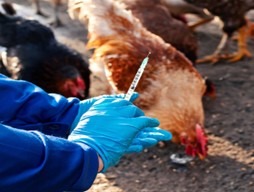
- Professional Administration: The vaccination team must be highly skilled to ensure the vaccine is administered in full and via the correct route, ensuring maximum protective benefit.
- Control of Immunosuppressive Factors: It is critical to avoid and manage immunosuppressive diseases, specifically Variant Gumboro (varIBDV), mycotoxins, and enteric diseases (intestinal infections), as these significantly impair the bird’s ability to develop immunity.
- Environmental Management: Chicks must be provided with the optimal brooding temperature to avoid environmental stress, which triggers physiological changes that suppress the immune response.
Therefore, at the commencement of a new production cycle, the following protocols must be strictly implemented:
- First: Eradication of rodents and insects.
- Second: Comprehensive cleaning, disinfection, and fumigation. The poultry house must be left vacant for an adequate downtime period prior to the arrival of the new flock. Furthermore, all feeders and drinkers must be thoroughly sanitized, both internally and externally.
- Third: Implementation of appropriate vaccination programs on a consistent and continuous basis.
Prof. Dr. Mohamed Hamoud Professor of Poultry Diseases, Faculty of Veterinary Medicine, Cairo University. Chief Operating Officer (COO) of CAIRO 3A.